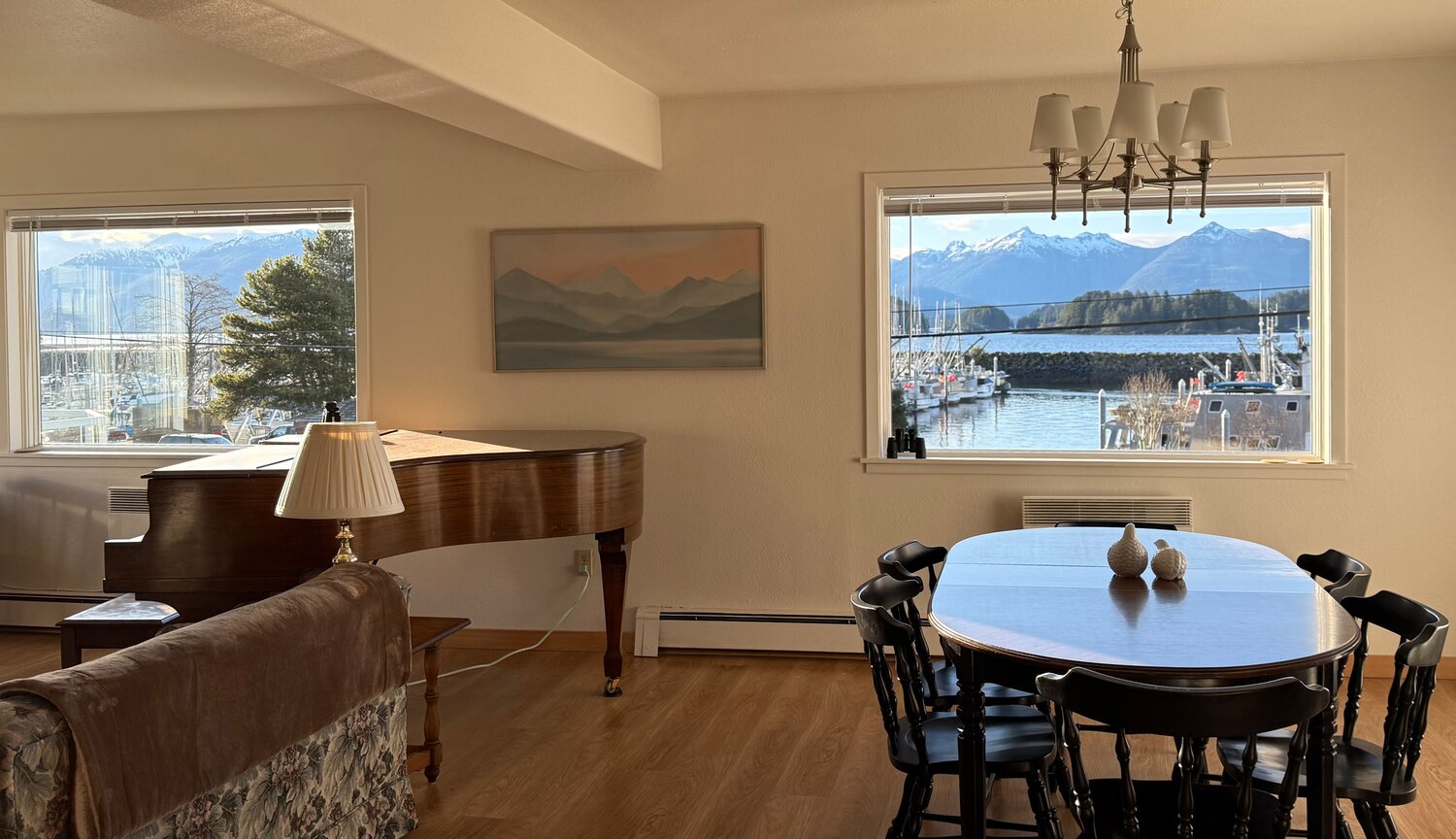
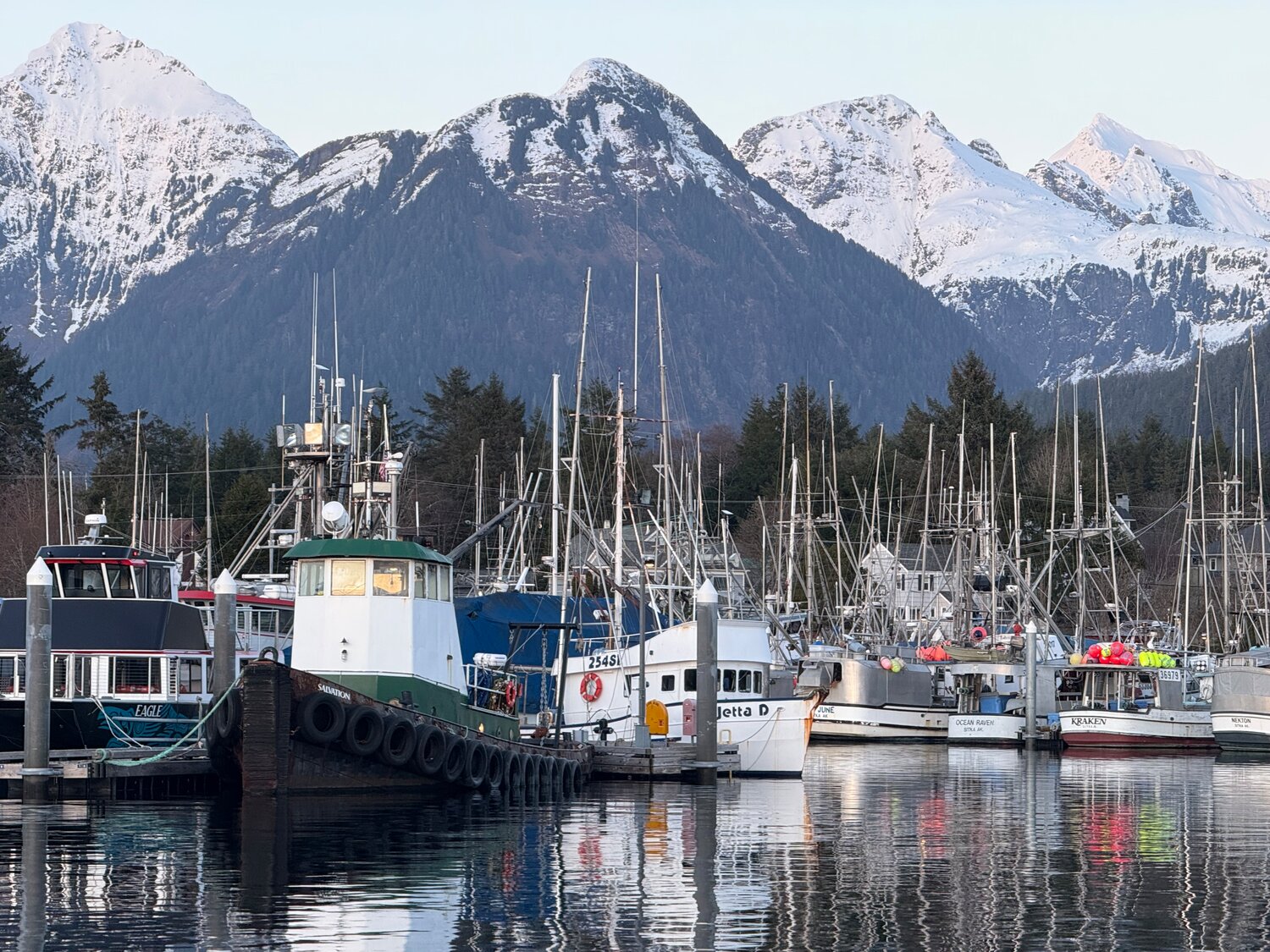
Guests of the Historic Emmons House enjoy incredible views with easy access to trails and the oceanfront from this centrally located home. Overlooking the downtown harbor and one block from downtown, this spacious 3-bedroom home offers a convenient base for all Sitka adventures, along with views of the Pacific Ocean dotted with forested islands, mountains, eagles and other birds and fishing boats coming and going from port.
It has a full kitchen with an island, two full bathrooms, dining room, living room with a piano.
Captain George Foster Emmons (1811-1884), commander of the USS Ossipee, sailed into the Sitka harbor with the United States and Russian Commissioners for the ceremony transferring the Alaskan territory to the United States on October 18, 1867. He began his distinguished career as a midshipman on April 1, 1828, and as a lieutenant aboard the USS Peacock, he participated in the Wilkes Exploring Expedition of 1838-42, which discovered the Antarctic Continent. He was assigned command of the expedition's overland party conducting surveys and exploration from Puget Sound south to San Francisco.
He also served in the Mexican-American War (1846-1848) and American Civil War (1861-1865). He became commodore in 1868, Chief of the Hydrographic Office in 1870, and Rear Admiral in 1872. As a Rear Admiral, he commanded the Philadelphia Navy Yard until his retirement in 1873.
The USS Emmons, sponsored by his granddaughter Mrs. F. E. Peacock, was a Gleaves-class destroyer launched on August 23, 1941. The ship was commissioned on December 5, 1941, and was sunk by the USS Ellyson on April 7, 1945, after suffering five hits from Kamikaze aircraft on the afternoon of April 6, 1945. In 1895, nearly 30 years after his father sailed into Sitka. His son, U.S. Navy Lt. George Thornton Emmons (1852-1945), and his wife, May, built this house for their family.
The original structure was a boxy American Foursquare design that followed the Russian public and residential building style which dominated the Sitka scene during the transitional period of architecture (1890-1930). It was the first house in Sitka to have plastered walls and was reputed as the place where important visitors such as John Muir dined.