
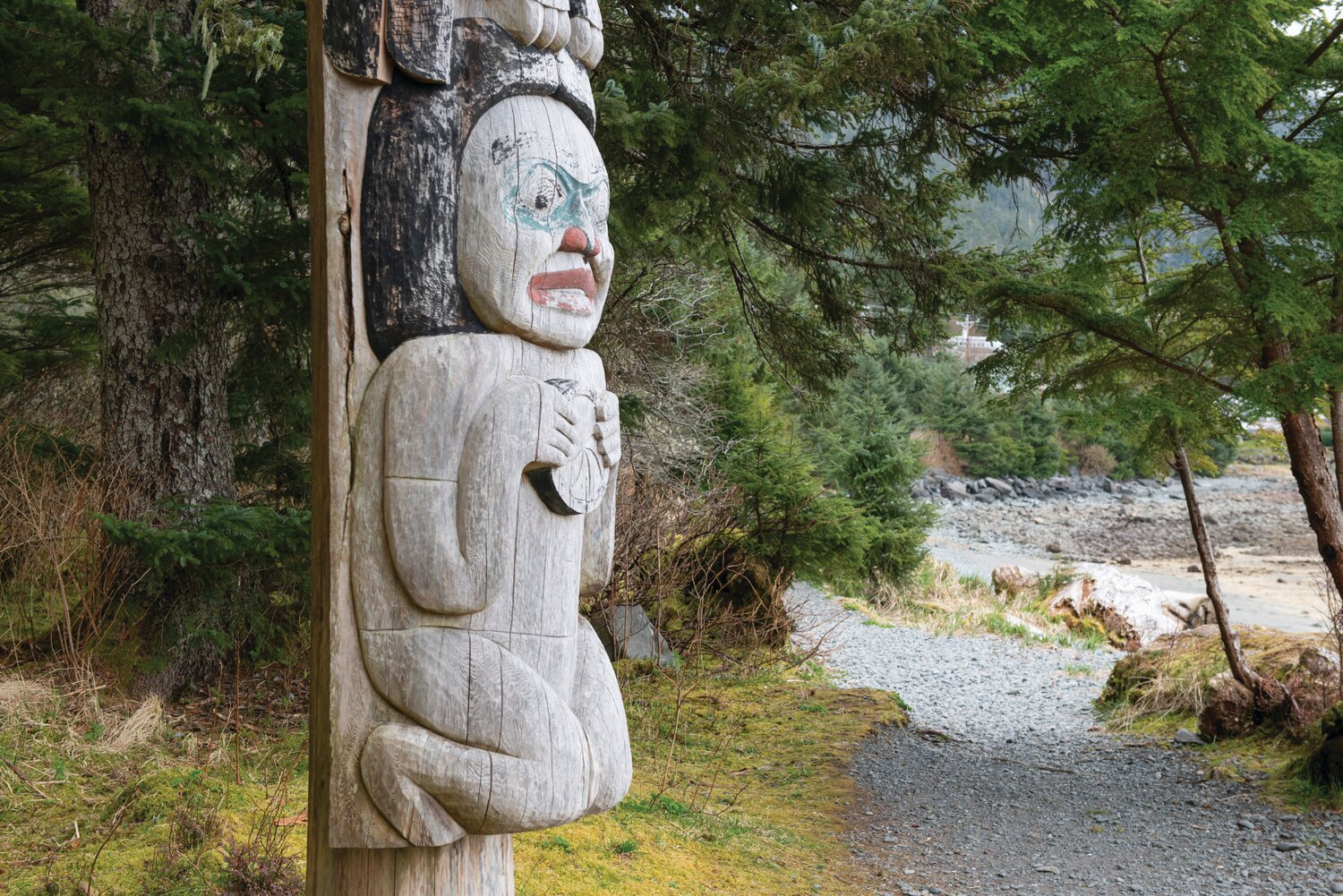
Sitka’s Alaska State Park sites offer recreation along with information and experiences related to Sitka’s history, on and off the road system.
Baranof Castle Hill State Historic Site is located downtown, on a hill where Russia on Oct. 18, 1867, transferred its claims to Alaska to the United States. It’s a good first stop for an overview of the town on a nice day.
The anniversary of the transfer, Alaska Day, is a state holiday. Each year the transfer ceremony is re-enacted on Castle Hill, and events including a parade, a formal ball, and competitions are held.
Observances by Sitka’s large Native community also are held – the original name of the hill is Noow Tlein, or Large Fort, and Tlingit clan structures sat atop the knoll for centuries before the 1804 battle between the Tlingits and Russians. The 1805 peace was conducted here, which ended with the Russians permitted to occupy the site for the Russian American Company headquarters.
Castle Hill is also the place where the first United States flag with 49 stars, marking Alaska’s entry into statehood, was raised shortly after midnight on July 4, 1959.
In addition to its historical significance – it’s also a National Historical Landmark – the site is popular for its sweeping view of downtown, Sitka Sound and the mountains.
Halibut Point State Recreation Area, four miles north of town, provides year-round access to beach-front recreation, picnic shelters, and a view of Mt. Edgecumbe. There are covered picnic shelters, as well as more secluded sites, and a half-mile hiking trail though the coastal spruce and hemlock forest.
Old Sitka State Historic Park is about seven miles out of town on Halibut Point Road and highlights the Russian hunting base established more than two centuries ago. The area, known to locals as Old Sitka or its original name Gajaa Heen, was referred to as New Archangel at the time and was the first Russian settlement in the area.
In 1802, Tlingit destroyed the outpost, then the Russians returned two years later and battled the Tlingits at their fort in what is now Sitka National Historical Park near downtown.
Today, Old Sitka State Historical Park features trails lined with interpretive signs, benches, a boat launch, and ample parking. Visitors may take a self-guided nature tour along a boardwalk and trail through muskeg and forest. The tour ends at a fish-viewing platform on the Nelson Logging Road, a prime spot for seeing the thousands of pink salmon, or “humpies,” as they travel upstream to spawn in late summer.
Old Sitka is also a National Historic Landmark.
The Sitka Sound area also has a few State Marine Parks a short boat ride from town. Two undeveloped state parks at Big Bear and Baby Bear bays are north of Sitka in Peril Strait, and the Magoun Islands State Marine Park are located 12 miles west of the Old Sitka boat launch. A third state marine park is located at Sea Lion Cove, 25 miles northwest of Sitka on Kruzof Island, and it includes a 3.5-mile hiking trail.
Fort Rousseau Causeway State Historical Park commemorates World War II-era Sitka.
The 60-acre area connects a 1.8-mile string of islands, extending from the airport runway into Sitka Sound, and is accessible only by boat.
The islands contain the remains of World War II concrete bunkers, fortifications, a meteorological station, headquarters building and anti-aircraft battery structures built as part of the Coastal Defense System in the late 1930s and early 1940s against the threat of the Japanese invasion.
Alaska State Parks cautions that some of the causeway is in disrepair, and some emplacements contain open floor sections, so a flashlight is advisable. It may be helpful to consult a tide table.
More information is available at www.dnr.alaska.gov/parks/, dnr.pkssoutheast@alaska.gov; or by calling (907) 269-8400.
Reservations for Halibut Point picnic shelters can be made at alaskastateparks.reserveamerica.com.


